
Initially when we started this website, we were assuming it would be exclusively financial, taxes or immigration based. But slowly we have transitioned to an “anything goes” website, as long as we tie back to our core concept of finance. We believe values during childhood, society’s influence and family set-up strongly influence one’s relationship with money. Nobody embodies financial frugality better than middle class Indian parents, and we will show you why with the three phases of a child’s life.
As a young child, we’d use pre-loved, no matter how dearly threadbare pre-loved they maybe. Nobody ever bought clothes. They just appeared as the preceding child outgrew it. The stitched fold on a a shirt or skirt would be opened as the child grew and marvelously the apparel continued to fit. The threads were probably being held together by all the glue from the starch when they were washed! And when clothes get too small or torn, we cut them as rag cloth to clean the house! Indian middle class pioneers the concept of circular economy. Being the younger of two children, and the second-youngest of 18 cousins, S does not remember having anything new as a child. This was probably an extreme case and has impacted her ability to buy herself anything nice as a financially independent adult. Self psychology 101. K had the same, but in a bit more moderation.
Meanwhile, the adults are in government or bank jobs, stashing away at their pension, paying off the home loan, putting away any extra money in a rainy day fund and demonstrate a healthy fear of living outside of one’s means. In both our families, our grandparents lived with us, and our parents’ income had to cover costs of three generations. So they lived super frugal – perhaps buying a single new sari or shirt per year for Diwali (or Christmas or Ramzan, whichever was celebrated at home). On occasion, the father, never the mother, would show Olympic worthy balancing ability as he deftly navigated traffic with atleast three passengers. Our parents slaved away at rather dull jobs, but did it without complaining and expressed extraordinary work ethic. Watching this in 1990s has helped both of us not grumble excessively about our current jobs, no matter how much we dislike them. While our families were super fortunate to never go hungry, and achieved the ultimate Indian dream of home ownership (on a mortgage), there was a lot everyone wanted, but never expressed out loud. Ultimately using this frugal approach, ours and other families climbed out of lower class into lower-middle class. The growth of the Indian middle class in 1990s-2000s is a very well documented economic phenomenon, and is the subject of numerous financial studies. Since we have witnessed it, or rather lived through it, we don’t find it extraordinary. As a society, Indians are wired to be cheap – this means saving for a rainy day beats spending on a sunny one.
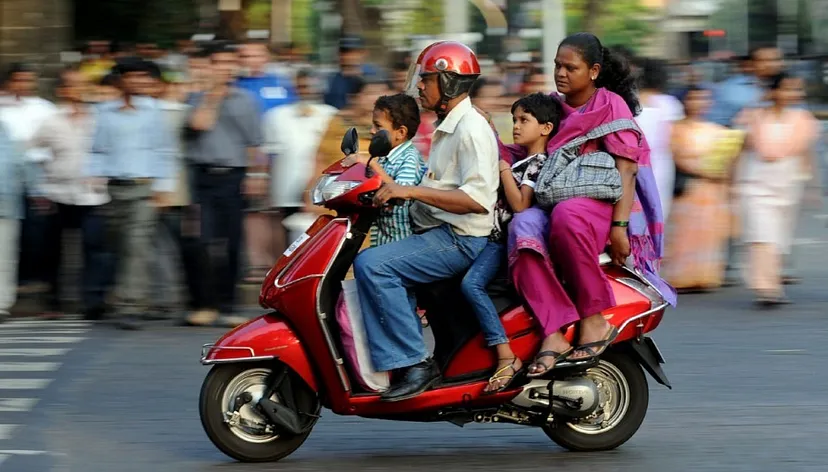
As a middle class Indian teen, you will contribute to the house chores (sweeping, mopping, cleaning the scooter, running any errands) and not get paid for it. House work is a privilege because you have a house, and things in it that need to be cleaned. Good approach to build some elbow grease based humility. Playing on the streets or climbing trees was highly accepted, even for girls, largely because it was free. Perhaps a new cycle in K’s case, a hand-me-down cycle for S, to substitute the walk to school with a ride. No cell phones, closely monitored phone calls from landlines, and perhaps one or two movies a year in the local theatre with friends was the norm. Computers showed up half-way through our teen years, and electricity wastage for computer games was not tolerated. S still finds herself turning off lights as soon as someone leaves the room, even temporarily. K has to tell S to monitor this habit when guests are around! The adults would still need to go to their jobs, and ofcourse we would play Prince of Persia, Aladdin or Wolf for a few hours. Computer would be switched off in-time for it to cool down before the adults came home. No vacations, only visits to see family in other cities. And S’s case, we also made annual crusades around South India to see one temple after the next, and pray to every form of the same God. And somehow every God had to be seen between the hours of 4am and 6am (for additional information Google Brahma Muhurtam), and the rest of the day was spent travelling to the next city’s temple to repeat the morning routine. S is very sad that she has seen Eiffel Tower and Statue of Liberty but having lived in India for 22years, is yet to visit Taj Mahal. She plans to make a trip soon and rectify this situation. Most of our friends in school were in similar situations and every June, when we would return to school after the uneventful summer break, we would enthrall each other with the most boring stories! But yet, somehow, the years of summer sunshine bring back fond memories, so we must’ve got something right, despite having so little.
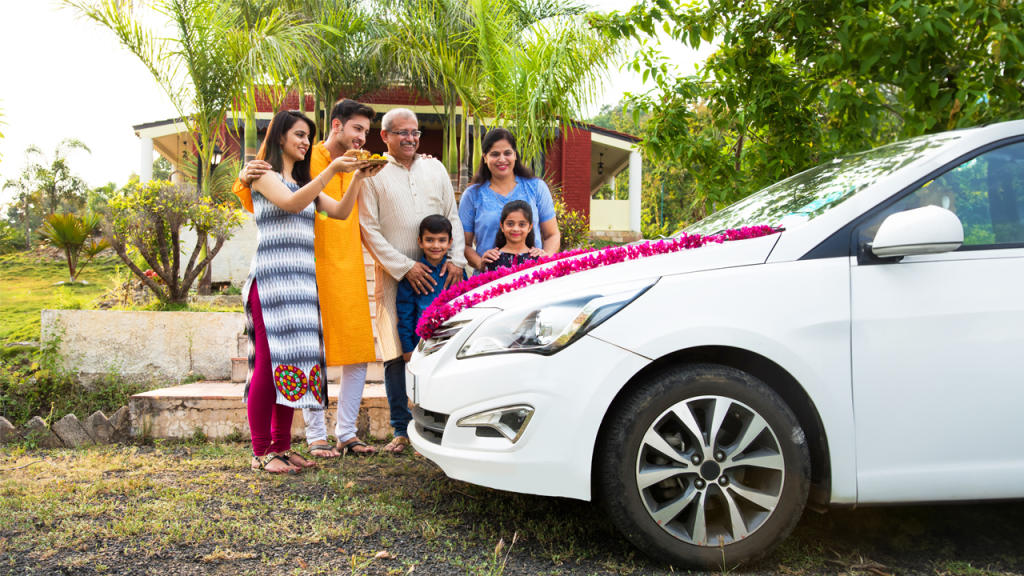
The adults meanwhile realized they are now financially comfortable and can afford extravagancies – a swanky new Hyundai Santro or a Maruti Swift arrives and the family takes weekly outings to a local temple or biweekly trips to a restaurant. The car is promptly cleaned as soon as it is parked back home in its rightful spot. The scooter is used as the daily mode of commuting to work, because of its apparent maneuverability around cows on the road, but truthfully because of its fuel economy. They also realize they too can invest in mutual funds like all the TV advertisements tell them, and they make their initial weary steps into the world of Demat accounts. They keep the whole process, and any lessons a secret, let alone the neighbors’ or other family find out that you are earning 8% interest and they are earning only 7.5%! Parents are now waking up to society in early-2000s and realizing education, especially foreign degree is valuable and start forcing their children to study for it, and themselves, save for it. In other parts of middle class India, they want to achieve a extravagant weddings for their daughters and realize the monetary leap between their ambition and reality. Saving $50,000 to pay for the degree (or wedding) is unfathomable, but try they shall. Enter re-frualization and the cycle of optimistic saving.
Child is all grown up, living away from home
We complete our bachelor’s degree, somehow manage to go abroad for a masters or doctoral degree. Since the child managed to find a job abroad as well, monthly payments to the Indian bank student loan is not at risk. The parents’ breathe a collective sigh of relief and the savings stash lives to be frugal for another day. They are proud because the child now embodies the definition of “settled”. However, no self respecting Indian middle class parent will give a child pocket money. So we never got pocket money and never learnt how to handle money. In hindsight, this is probably not a good strategy, because it made the transition to adulthood extremely hard. Suddenly, bank balances, monthly payments, interest rates, credit, debit, and other abstract economic terms became reality and we learn by making mistakes, alone, with no safety net. With a lot of quick learning, we manage to keep the raft afloat and await the parent’s first visit to our new homes.

Parents enter the last years of their career, and see they have disposable income, but refuse to spend it. It’s a dirty phrase to their generation- no income is disposable. Once they enter retirement, their pension is worth a lot, and can fund a more relaxed lifestyle, but they refuse to change their habits. Parents continue to live frugally and love seeing their bank balance grow. The parents’ only single luxury is one annual pilgrimage, in economy class, to their children’s house for six months and promptly return to the motherland when it gets too cold abroad. Six months, thankfully, the maximum time one can stay in USA, UK or Schengen countries on a visitor visa. Suddenly, after spending years together, in which power was one-sided, and years apart, in which the child has grown leaps and bounds, the parents are shocked to see the children as responsible adults, who can make their own decisions.
And this brings us back to the timing of the article with K’s parents’ visit for the last three months. The above, while it sounds generic, is likely an apt representation of Indian middle class family with NRI children. Plenty of good life lessons, but a little loser on purse strings, would’ve also caused less physiological damage long-term and yielded a closer relationship. Looking back, there is not much I would change – perhaps a movie with friends on a more regular basis, maybe a real vacation for a few days in addition to the rushed temple tour and possibly eating out as a family more than once a month. These would’ve been blasphemy to our parents’ generation but would’ve resulted in wonderful memories built together. We find ourselves often pondering how to create finally viable low-cost but big-love memories with our child.
What financial lessons have you learnt during your upbringing? Hopefully, they were a good mix of frugal and fun life choices. With a young child, we now find ourselves frequently thinking on how to impart good financial sense to our little one. We have a few more years to figure this one out, but always open to hearing good ideas that have worked for others.
 Retire from 8 to 5
Leave a comment